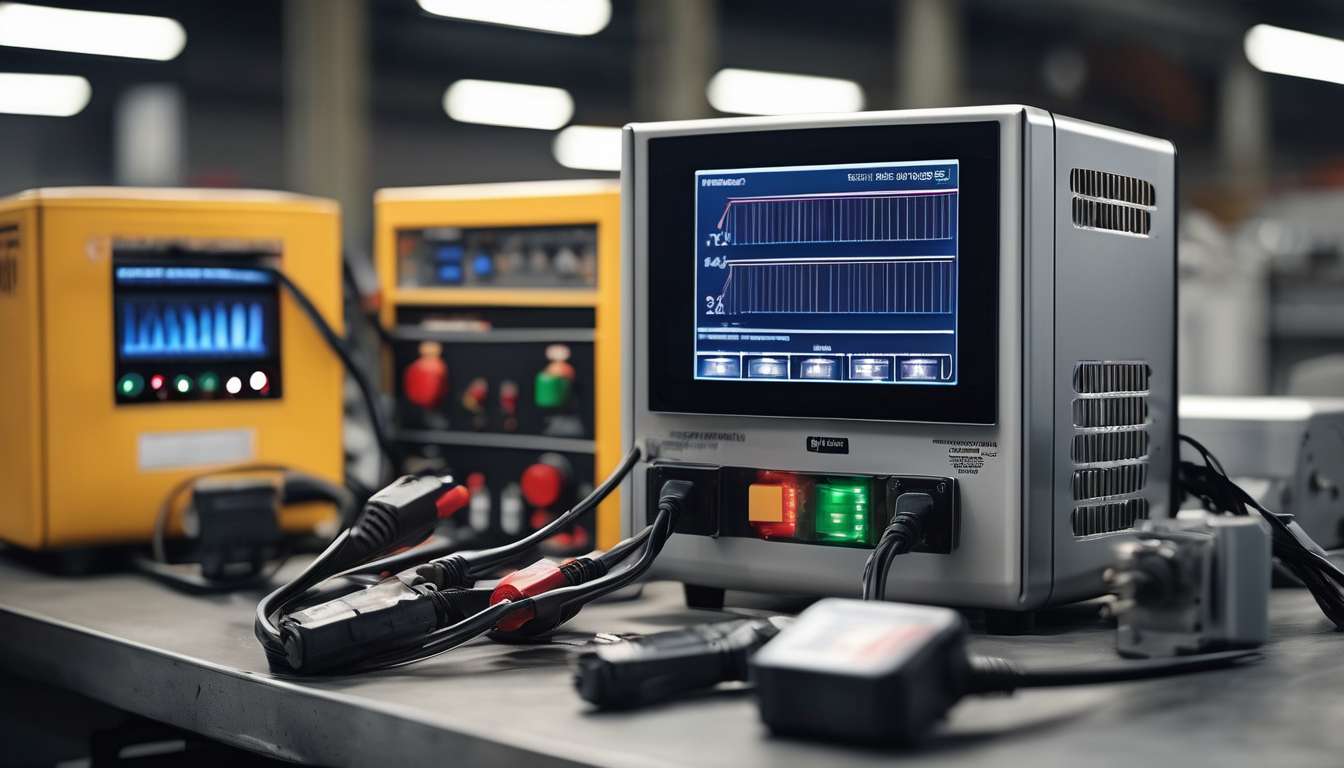
In the ever-evolving landscape of industrial technology, the integration of smart diagnostics in battery chargers parallels the advancement of wearable health tech in medicine. Just as wearable devices monitor various health parameters to provide insights and preventative care, battery chargers equipped with built-in diagnostics offer real-time monitoring and maintenance alerts for industrial equipment.
This unexpected connection highlights how different fields are converging on similar technological solutions to enhance efficiency and reliability.
In industrial settings, where equipment downtime can lead to significant financial losses, these intelligent battery chargers play a vital role. They continuously assess the condition of a battery, ensuring optimal performance and longevity, much like a health tracker aims to optimize human performance.
By preemptively identifying potential issues before they escalate, these advanced chargers:
- Reduce maintenance costs
- Improve operational continuity
As industries increasingly prioritize automation and predictive maintenance, the adoption of such diagnostic-enabled technologies is poised to become a standard practice.
To explore some of the most innovative smart diagnostic battery chargers available today, take a look at these via the link here.
Enhancing Equipment Efficiency and Reliability
A reliable industrial battery charger significantly boosts equipment efficiency and reliability by ensuring optimal power management. This achievement is largely due to the integration of advanced diagnostic capabilities that continuously evaluate the battery’s condition.
Diagnostics play a pivotal role in identifying potential issues before they escalate, thereby minimizing downtime and ensuring seamless operation. By providing detailed insights into battery health, diagnostics enable informed decision-making, fostering a sense of confidence and collaboration among team members.
Efficiency is further enhanced through the precise charging techniques employed by these chargers. These techniques ensure that:
- Batteries are charged to their optimal capacity without overcharging.
- Battery life is prolonged.
- Energy consumption is optimized.
Moreover, efficient chargers contribute to reducing operational costs, aligning with the goal of sustainable resource management.
Regular maintenance is simplified as the diagnostic features provide valuable data that guide maintenance schedules. This proactive approach:
- Minimizes unexpected disruptions.
- Enhances the reliability of equipment.
- Creates a dependable operational environment.
- Reinforces a sense of community within the industrial setting.
Real-Time Monitoring for Preventative Maintenance
Real-time monitoring leverages advanced technology to detect anomalies early, facilitating timely interventions and enhancing preventative maintenance strategies.
In industrial settings, the integration of diagnostics in battery chargers plays a crucial role in optimizing equipment performance and reliability. By continuously assessing operational parameters, real-time systems provide valuable insights that contribute to efficient maintenance practices.
Key Benefits of Real-time Monitoring:
-
Early Detection of Issues:
- Potential issues are identified before they escalate.
- Reduces downtime and safeguards the longevity of equipment.
-
Enhanced Efficiency:
- Maintenance teams can allocate resources more effectively.
- Focus is directed towards areas that require immediate attention.
-
Improved Reliability:
- Reliability of industrial operations is significantly improved.
- Fosters a sense of security and belonging among stakeholders.
Comprehensive Data for Decision-Making:
- The data collected through real-time diagnostics serves as a valuable tool for informed decision-making.
- Facilities can analyze this information to fine-tune their maintenance strategies.
- This leads to streamlined operations and a more resilient industrial infrastructure.
The importance of real-time monitoring in achieving these objectives cannot be overstated. It is a proactive approach that enhances overall efficiency and reliability in industrial environments.
Cost Savings Through Proactive Alerts
Proactive alerts significantly reduce operational costs by enabling timely interventions and minimizing unplanned downtime. These alerts, integrated with advanced diagnostics, provide critical insights into the condition of industrial battery chargers.
By identifying potential issues before they escalate, proactive alerts facilitate efficient maintenance schedules. This ensures that equipment remains operational, enhancing productivity and reducing costs associated with emergency repairs and replacements.
Efficiency is further achieved by utilizing data from diagnostics to optimize maintenance tasks. Targeted maintenance, informed by detailed diagnostics, eliminates unnecessary service interventions and aligns maintenance efforts with actual needs. This approach:
- Conserves resources
- Extends the lifespan of equipment
- Reduces capital expenditure on new purchases
Belonging to a community that values efficiency and cost-effectiveness is crucial for industrial operators. Proactive alerts create a network of informed decision-making, fostering a culture of reliability and trust.
Embracing these technologies signifies a commitment to operational excellence and positions organizations as leaders in industrial maintenance innovation.
Ensuring Optimal Performance and Longevity
To ensure optimal performance and longevity, industrial battery chargers must undergo regular assessments and adjustments based on real-time data insights. This approach leverages diagnostics to identify potential inefficiencies and areas requiring maintenance before they escalate into significant issues.
By utilizing these insights, organizations can maintain the efficiency of their charging systems, which is essential for sustaining operations and reducing downtime.
Implementing a robust diagnostics system enables early detection of irregularities, allowing for timely interventions and minimizing the risk of unexpected failures. This proactive strategy contributes to extending the lifespan of battery chargers and ensures they operate at peak performance levels.
Maintenance schedules informed by diagnostic data can be more accurately planned, ensuring that:
- Resources are allocated effectively
- There is minimal disruption to industrial activities
Incorporating advanced diagnostic capabilities into battery chargers fosters a sense of belonging within an industry community committed to high standards of operational excellence. This collective pursuit of efficiency and reliability underscores the importance of continuous improvement and innovation in industrial environments.

Key Role in Industrial Operational Continuity
Industrial battery chargers play a critical role in maintaining operational continuity by ensuring uninterrupted power supply to essential equipment and processes.
The integration of diagnostics within these chargers enhances their efficiency by enabling the early detection of potential issues before they escalate into critical failures. This proactive approach to identifying faults reduces downtime and supports the seamless functioning of industrial operations.
Efficiency in power management is achieved through advanced diagnostic features, which provide real-time information on battery health and charge status. This data allows for:
- Optimized maintenance schedules
- Prevention of unscheduled interruptions
- Extension of the lifespan of both the charger and the battery
By maintaining optimal performance, industrial battery chargers contribute to the reliability and productivity of the entire enterprise.
Furthermore, routine maintenance is simplified with built-in diagnostics, ensuring that chargers operate at peak efficiency. This fosters a sense of security within industrial environments, as stakeholders can trust in the consistent availability of power for their operations, reinforcing a collective commitment to operational excellence.
Standard Practice in Diagnostic-Driven Industries
In today’s diagnostic-driven industries, leveraging advanced battery charger technologies has become a standard practice to ensure operational efficiency and reliability. These industries prioritize diagnostics as a key component of their maintenance protocols, ensuring that equipment remains in optimal condition.
Advanced battery chargers with built-in diagnostics facilitate real-time monitoring and analysis, which enhances overall system performance. This approach not only:
- Identifies potential faults before they escalate
- Reduces downtime
As a result, they support continuous operations.
Efficiency gains are realized through predictive maintenance strategies enabled by diagnostic capabilities. By integrating these technologies, industries can:
- Optimize resource allocation
- Minimize unexpected failures
- Extend the lifespan of their assets
The incorporation of diagnostics into battery chargers aligns with the industry’s commitment to sustainable and efficient practices, fostering a sense of community and shared goals among stakeholders.
Maintenance teams benefit from streamlined processes, as diagnostics provide clear insights into the state of equipment. This empowers informed decision-making, reinforcing the importance of diagnostics in maintaining high productivity levels across various industrial sectors.